
Period properties: How do I know if my property is Georgian, Victorian or Edwardian?
Whether you’re interested in certain features when looking for your new home or simply curious about how these prominent architectural styles differ from one another.
Our short guide will help you identify and understand the main British architectural styles, their respective features and appeal.
V | N Journal
Design & Architecture
4th February 2026
When house-hunting or just browsing at property listings, you’ve likely come across the terms ‘Georgian, Victorian or Edwardian’ when describing or a home or perhaps a home being simply referred to as a ‘period property’. On these listings, there’s never a definition to explain what these terms actually refer to, and what is the relevance and/or importance is.
Our guide will help you understand the distinctions between these differing architectural styles followed with a conclusion, providing our thoughts and insight as to why these ‘period properties’ have such natural appeal and charm.
Georgian Architecture
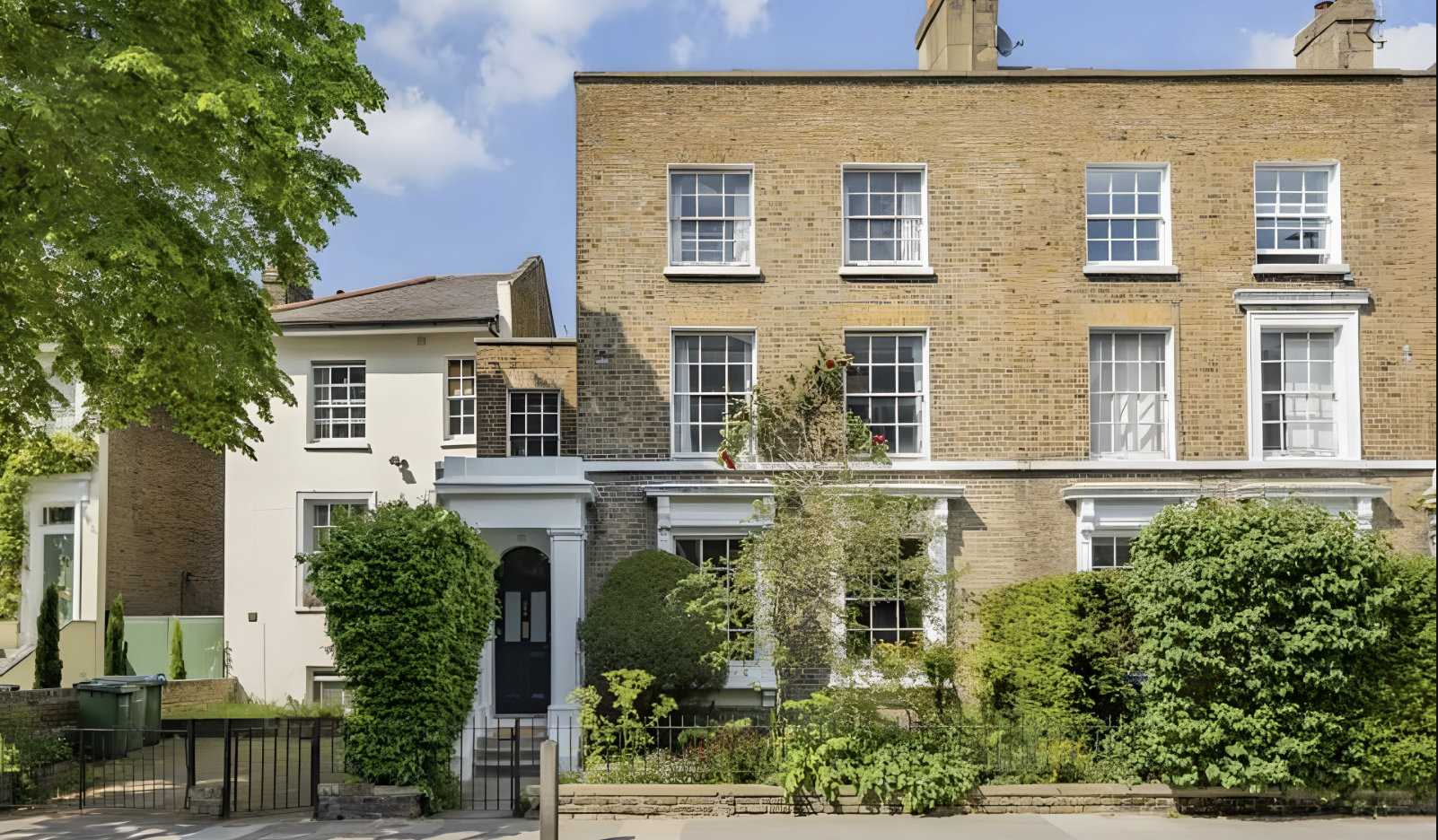
Semi-Detached Georgian House Blackheath, London.
The Georgian era, spanning from 1714–1830, is the oldest and longest lasting of the three main architectural styles. Beginning with the reign of King George I all the way through to the death of King George IV in 1830.
Generally, Georgian homes were commissioned by wealthy land owners. They’re generous in terms of size, proportions and stature. Inspiration for this architecture was taken from classic Greek and Roman design with a focus on symmetry, large windows to allow for an abundance natural light, and grand panelled door as the centrepiece.
Another feature of common in Georgian architecture is a less elaborate top floor with lower ceilings and smaller windows as this is where household staff lived, while the family occupied the floors below which were more spacious.
Key characteristics for Georgian properties
• Large townhouses set over three or four storeys
• Grand, symmetrical exteriors with a panelled door in the centre
• Façades are typically: red brick or Stucco-fronted in white or cream plaster. Early Georgian homes were typically rendered only at the lower level, leaving upper brickwork exposed.
• High ceilings, detailed cornicing and fireplaces in most rooms
• Large sliding sash windows, often with small or dormer windows on the top floor. Between 1696–1851, a window tax was introduced in place of income tax as the number of windows was associated with wealth. This prompted many homeowners to brick up windows to reduce their tax bill, so a telltale sign of a Georgian home is a bricked-up window.
• The Roofline is often hidden behind a parapet, making the building appear as a rectangle.
Victorian Architecture
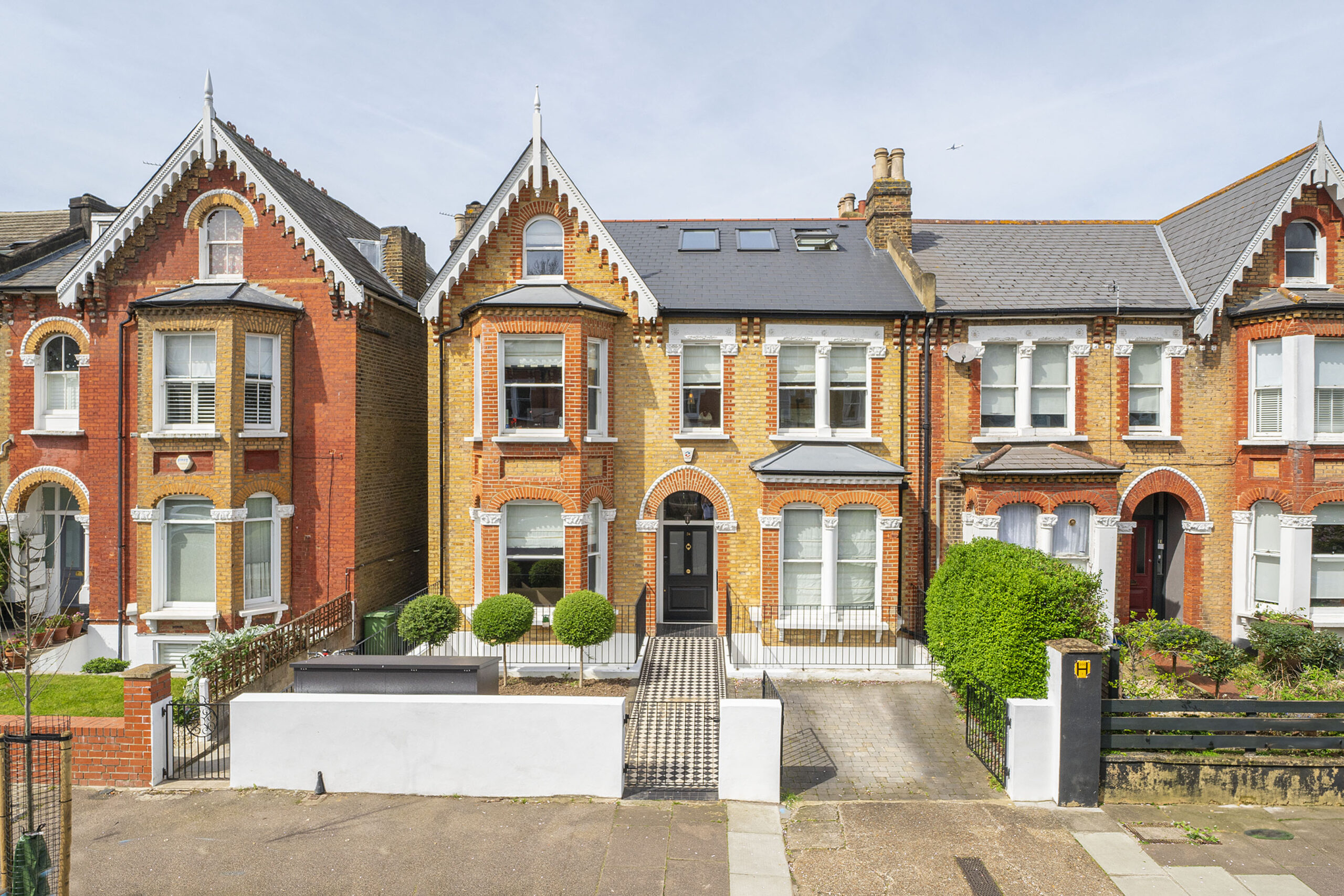
Semi-Detached Victorian House, East Dulwich, London.
The Victorian era lasted 64 years, from 1837–1901. This architectural period showcased more flexibility than ever before when it came to how homes were built. Grand villas for wealthy homeowners to back-to-back terrace housing for factory
workers. This era encompassed many sub-styles too including: Gothic Revival, Italianate, Second Empire, Stick Style, Romanesque Revival & Shingle Style.
Within these 64 years there was a shift in social attitudes, architecture, and ownership of your home as the Industrial Revolution sparked a boom in more modest and accessible housing.
Influenced by the predeceasing Georgian architecture, features like large windows and high ceilings were carried into Victorian architecture although, through this period, homes typically became smaller as mass production occurred to account for a growing population and to make more housing available.
Key characteristics for Victorian properties
• Colourful brickwork, decorative ironmongery, painted trim
• Asymmetry, irregular and different layouts and shapes
• Sash or bay windows
• High ceilings
• Fireplaces as central features, geometric pattern tiles in hallways & pathways
• Narrow hallways, multiple entertaining rooms
Edwardian Architecture
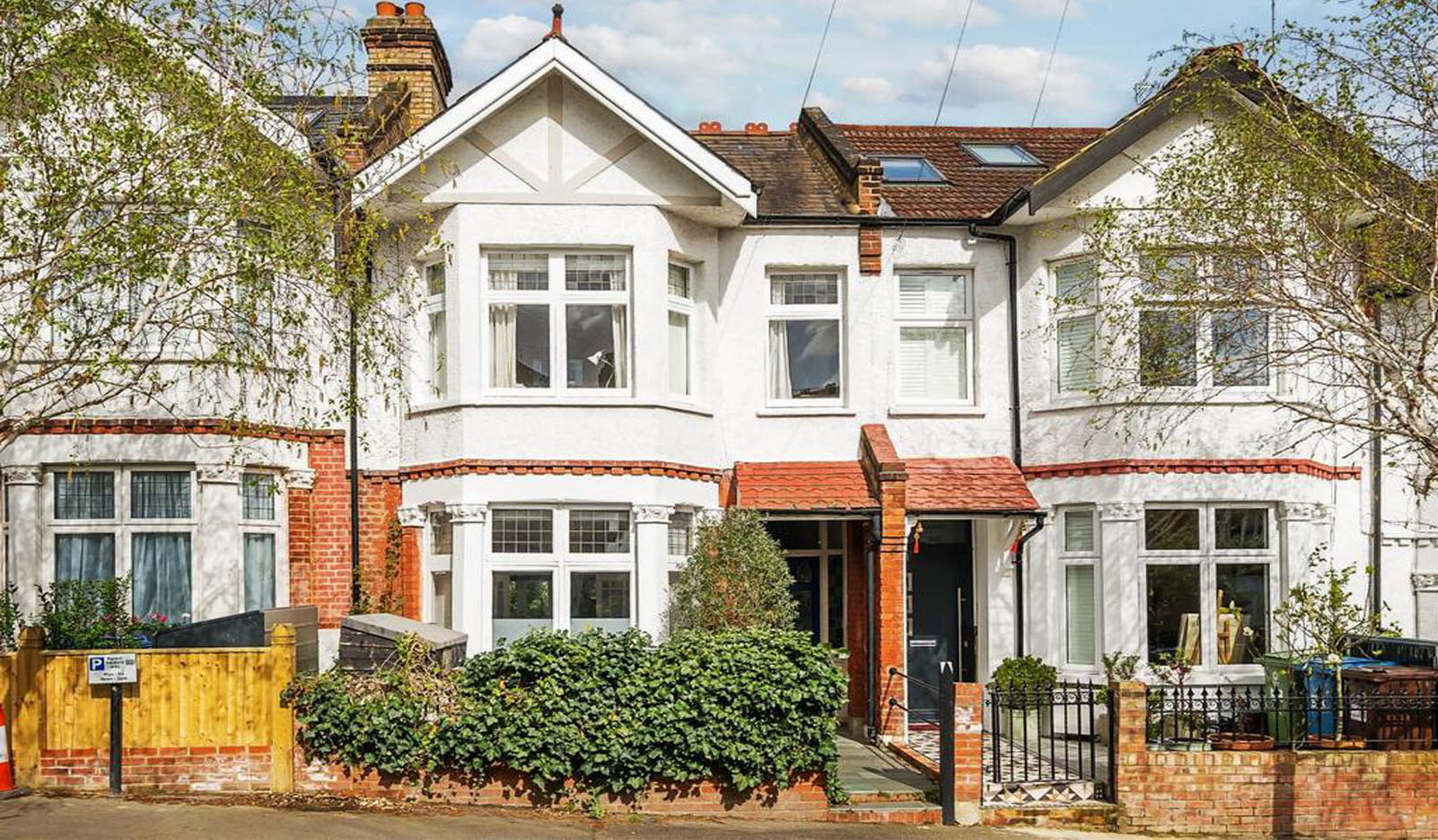
Mid-Terrace Edwardian House, Herne Hill, London.
Arguably the shortest era of the main British architectural periods, the Edwardian era. Lasting 9 years from 1901–1910. Though brief in time, this era left a significant architectural legacy. Compared to the predeceasing architectural styes, the
Edwardian era marked a shift in the way homes were produced. With a growing desire for homes with more natural light, privacy and space, these homes were wider and shorter than the predeceasing Victorian homes, with grander hallways and larger gardens.
Influenced by the Arts & Crafts movement, the priority was handcrafted design rather than mass production, like in the Victorian era. Whilst the Edwardian era was short, a substantial number of homes were built due to the increase in population and expansion of railways, leading to a newer ‘garden suburb’ concept.
Key characteristics for Edwardian properties
• Large and wide bay windows
• Red brickwork, often with Mock-Tudor detailing
• Wooden-framed porches with decorative railings.
• Well-crafted, symmetrical façade
• More likely to have a front garden
• Spacious and light rooms, that are wide in dimension
Oversight
Period homes typically refer to the architectural styles for buildings constructed prior to the beginning for the First World War. The three notable styles being Georgian, Victorian and Edwardian.
Whilst these homes are arguably some of the most aesthetically pleasing homes you will find on the market, there are two main considerations that need to be thought through before you decide to go ahead and buy a slice of British Architectural History.
The first being the potential cost of renovation, remedial or maintenance that these buildings can require. It’s easy to be drawn in by the charm and allure of these beautiful properties but it is essential that you do your research, carrying out the necessary due diligence and so you know exactly what you are getting yourself in for.
The second consideration is location. Not every area has every type of architecture. Depending on what your requirements are when house-hunting, there may need to be a compromise. If you are set on being in a specific area, it’s important that you research the types of homes that are available, as that particular area may not have the architectural style you are looking for.
In short, these homes have a timeless appeal and elegance to them which just cannot seem to be replicated. Making them a perfect option for raising a family in a leafy suburb or enjoying city-living inside a slice of architectural history.